
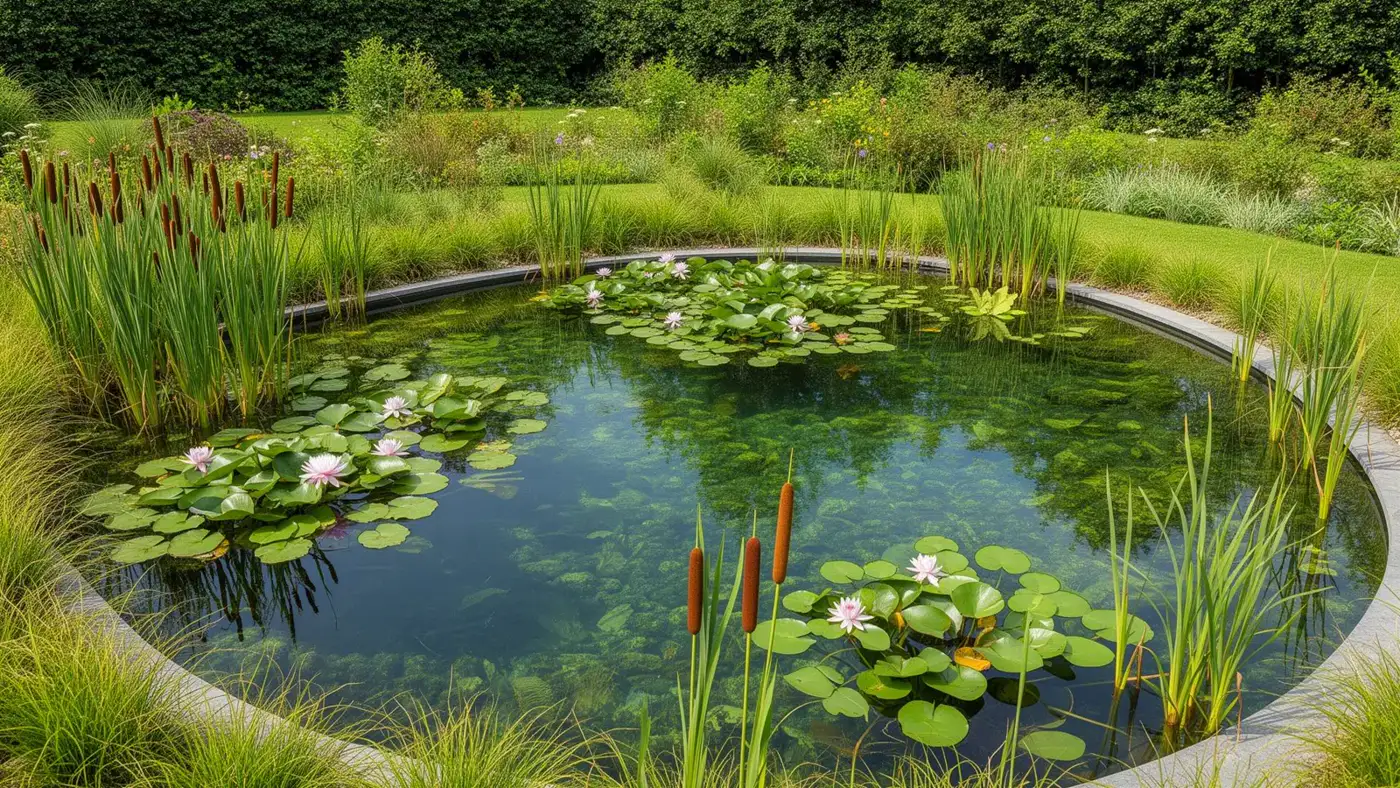
5 Types of Aquatic Plants for Your Natural Swimming Pond
Discover the essential aquatic plants that keep your swim pond crystal clear—from oxygenating submerged plants to beautiful water lilies. Learn which plants work best for Kansas City and Arkansas climates.
If you're building or maintaining a natural swimming pond, plants aren't just decoration—they're your filtration system. The right combination of aquatic plants keeps water crystal clear without chemicals, creates habitat for beneficial organisms, and transforms your swim pond into a living ecosystem.
We've installed swim ponds across Kansas City and Northwest Arkansas for over a decade. Here's what we've learned about the plants that actually work in our Midwest climate.
Why Plants Matter in Natural Swim Ponds
Traditional pools use chlorine and mechanical filters to keep water clear. Natural swim ponds take a different approach—they use plants to absorb nutrients that would otherwise feed algae. It's the same principle that keeps healthy lakes and rivers clean.
The magic happens in your "regeneration zone" (the planted area adjacent to or surrounding your swimming area). As water circulates through this zone, plant roots consume nitrogen, phosphorus, and other nutrients. Beneficial bacteria colonizing the root systems further break down organic matter. The result? Clear, swimmable water without harsh chemicals.
The Five Essential Plant Categories
Every successful swim pond needs plants from multiple categories working together. Think of it like building a team—each type serves a specific purpose.
Submerged Oxygenators(3 plants)
Floating Plants(3 plants)
Marginal/Emergent(6 plants)
Water Lilies & Lotus(4 plants)
Bog Plants(4 plants)
Legend: Sun icons show light requirements • Depth indicates planting depth in inches • Hardy plants survive KC/NWA winters outdoors
1. Submerged Oxygenating Plants (The Workhorses)
These underwater plants do the heavy lifting in your swim pond. They release oxygen directly into the water (hence the name) and compete aggressively with algae for nutrients.
Best choices for Kansas City & Arkansas: - Hornwort (Ceratophyllum demersum) — Native to our region, incredibly hardy, tolerates Kansas City's cold winters and Arkansas's hot summers. Fast-growing and excellent at nutrient absorption. - Waterweed (Elodea canadensis) — Another native that stays green year-round. Fish love to hide in it if you have a combined pond. - Cabomba — Beautiful feathery leaves, but less cold-tolerant. Works better in Northwest Arkansas where winters are milder.
Planting tips: - Plant in gravel beds or weighted bunches at the bottom of your regeneration zone - Aim for 60-70% coverage of the regeneration area floor - Thin as needed—these plants grow fast in summer
How many? Start with about 1 bunch per 2 square feet. They'll fill in quickly.
2. Floating Plants (The Shade Makers)
Floating plants serve two critical functions: they shade the water (reducing algae growth) and their dangling roots absorb nutrients directly from the water column.
Best choices for our region: - Water Hyacinth (Eichhornia crassipes) — Stunning purple flowers and aggressive nutrient uptake. Not winter-hardy here—treat as an annual or overwinter indoors. - Water Lettuce (Pistia stratiotes) — Rosette-shaped leaves that spread quickly. Also annual in our climate. - Frogbit (Hydrocharis morsus-ranae) — Smaller and more delicate, but can survive mild winters submerged. - Duckweed — Controversial choice. Excellent filtration but spreads aggressively. We only recommend in contained areas.
Coverage guidelines: - Aim for 30-50% surface coverage in the regeneration zone - Too much blocks light to submerged plants - Too little allows excessive algae growth
Pro tip: Water hyacinth and water lettuce explode in our hot Midwest summers. Start with just a few—you'll be removing extras by August.
3. Emergent/Marginal Plants (The Natural Edges)
These plants grow in shallow water (1-12 inches deep) with their roots submerged but foliage above water. They create natural transitions between water and land while filtering nutrients at the pond's edges.
Best native choices: - Pickerelweed (Pontederia cordata) — Blue flower spikes all summer, 2-3 feet tall. One of our favorites for swim pond edges in both Kansas City and Arkansas. - Blue Flag Iris (Iris versicolor) — Native iris with stunning blue flowers in spring. Deer-resistant and low maintenance. - Arrowhead (Sagittaria latifolia) — Distinctive arrow-shaped leaves and white flowers. Produces edible tubers (duck potato) that attract waterfowl. - Soft Rush (Juncus effusus) — Green cylindrical stems that stay upright year-round. Excellent for modern, minimalist pond designs. - Lizard's Tail (Saururus cernuus) — Heart-shaped leaves and drooping white flower spikes. Tolerates deeper water than most marginals.
Ornamental options: - Canna — Tropical look with large leaves and bright flowers. Zone 7 hardy (treat as annual in KC, perennial in NWA). - Papyrus — Elegant umbrella-like tops. Tender—bring indoors for winter or treat as annual. - Umbrella Palm (Cyperus alternifolius) — Similar look to papyrus but slightly hardier.
Planting zones: - 0-3 inches deep: Blue flag iris, soft rush - 3-6 inches deep: Pickerelweed, arrowhead - 6-12 inches deep: Lizard's tail, cattails (use cautiously—very aggressive)
4. Water Lilies & Lotus (The Show-Stoppers)
These deep-water plants root at the bottom but send leaves and flowers to the surface. They provide crucial shade, reduce algae, and create the classic "natural pond" aesthetic everyone loves.
Hardy Water Lilies for Our Climate: Water lilies are categorized as hardy (survive winter outdoors) or tropical (annual unless stored indoors).
- 'Marliacea Chromatella' — Yellow flowers, mottled leaves. Extremely reliable bloomer. Our go-to recommendation for beginners. - 'Attraction' — Deep red blooms that age to garnet. Stunning in naturalistic settings. - 'Perry's Baby Red' — Compact variety perfect for smaller swim ponds. - 'Helvola' — Dwarf variety for container planting or small regeneration zones. - 'Comanche' — Flowers change from yellow to orange to red as they age. Conversation piece.
Hardy Lotus: Lotus are even more spectacular than lilies, with flowers rising above the water surface and dramatic seed pods.
- 'Mrs. Perry D. Slocum' — Flowers open pink, fade to yellow, then cream. Multi-day color show. - 'Momo Botan' — Double peony-style flowers in deep rose. Dwarf variety good for containers. - 'Green Maiden' — White flowers with green tips. Elegant and unusual.
Important considerations: - Water lilies need 4-6 hours of direct sun minimum - Plant in fabric pots with clay soil (not potting soil—too much organic matter) - Fertilize with aquatic fertilizer tablets monthly during growing season - In swim ponds, keep lily coverage to 20-30% of the swimming zone to maintain clear paths
5. Bog Plants (The Biofilter Stars)
If your swim pond design includes a dedicated bog filter (and it should), these plants thrive in the shallow, nutrient-rich conditions of the filter bed.
Top performers: - Sweet Flag (Acorus calamus) — Grass-like foliage with fragrant roots. 'Variegatus' variety adds white stripes. - Canna 'Pretoria' — Striped leaves and orange flowers. Incredible nutrient uptake in boggy conditions. - Taro (Colocasia esculenta) — Giant elephant ear leaves. Tropical look but survives in zone 7b+ (most of NWA, borderline for KC). - Louisiana Iris — Larger and showier than blue flag. Multiple color options including yellow, purple, and rust. - Cardinal Flower (Lobelia cardinalis) — Brilliant red spikes that attract hummingbirds. Native wildflower.
Bog filter basics: A gravel-filled bog filter connected to your swim pond acts as a living biofilter. Water pumps through the gravel bed, plant roots extract nutrients, and clean water returns to the pond. We typically recommend 10-20% of total pond volume as bog filter capacity.
Seasonal Plant Care in Kansas City & Arkansas
Spring (March-May): - Remove winter debris from marginals - Divide overgrown water lilies before growth starts (rhizomes should have 2-3 growing points each) - Add new floating plants after last frost (mid-April KC, early April NWA) - Begin fertilizing lilies and lotus when water temps reach 60°F
Summer (June-August): - Thin aggressive floaters every 2-3 weeks - Deadhead spent lily flowers to encourage reblooming - Watch for aphids on water lilies—spray off with water or introduce ladybugs - Monitor submerged plants for excessive growth
Fall (September-November): - Remove tropical/annual plants before first frost - Cut back dead marginal foliage after it browns (leave 4-6 inches above water) - Stop fertilizing lilies when water temps drop below 60°F - Lower potted lilies to deepest part of pond (18+ inches) for winter protection
Winter (December-February): - Most aquatic plants go dormant—this is normal - Keep a hole in ice for gas exchange if you have fish - Don't remove submerged plants—they continue filtering even in cold water - Check lotus and lily tubers in spring for rot
Common Mistakes We See
Over-planting: Enthusiasm leads to jungle conditions within 2 years. Start with 50% of what you think you need.
Wrong light conditions: Most flowering aquatics (lilies, lotus, pickerelweed) need full sun. Shade-grown plants produce leaves but few flowers.
Ignoring invasive species: Cattails, purple loosestrife, and yellow flag iris are beautiful but can take over a pond in 2-3 seasons. Use cautiously in contained areas only.
Using pond potting soil: Rich organic soil releases nutrients into the water, feeding algae instead of starving it. Use heavy clay or aquatic planting media.
Forgetting winter protection: Tropical plants need to come inside. Hardy plants need adequate water depth (18+ inches) to survive frozen conditions.
Our Favorite Plant Combinations
Modern minimalist: Soft rush + white hardy lilies + papyrus (annual)
Naturalistic wildlife pond: Pickerelweed + arrowhead + blue flag iris + hornwort + native yellow lily
Tropical resort feel: Canna + taro + water hyacinth + tropical lilies + papyrus
Cottage garden style: Mixed color lilies + Louisiana iris + cardinal flower + lizard's tail
What About Algae?
Some algae is normal and even beneficial—it's part of the food chain. Problems occur when nutrient imbalances create blooms.
If you're seeing excessive algae: 1. Check plant coverage—you may need more plants in the regeneration zone 2. Test nutrient levels (especially phosphorus) 3. Ensure adequate water circulation through planted areas 4. Add barley straw or beneficial bacteria as temporary measures 5. Consider whether too many fish or overfeeding is adding nutrients
A properly planted swim pond reaches biological equilibrium within 1-2 growing seasons. Year one may be "green" as plants establish. Year two gets better. By year three, you'll wonder why anyone uses chemicals.
Ready to Plan Your Swim Pond Plants?
Every swim pond has unique conditions—sun exposure, size, depth, aesthetic goals. We design custom planting plans for natural swimming ponds in Kansas City, Overland Park, Lee's Summit, and across Northwest Arkansas.
Our process includes selecting plants suited to your specific site, calculating appropriate quantities for your regeneration zone, and providing seasonal care guidance. Many clients also choose our maintenance programs for ongoing plant management and water quality optimization.
Frequently Asked Questions
Can I swim with the plants? The swimming zone is kept plant-free. Plants live in the adjacent regeneration zone where water circulates for filtration. You swim in clear, open water.
How long until plants filter the water? Most swim ponds achieve clear water within one growing season (May-September). Full ecosystem balance takes 2-3 seasons.
Do plants attract mosquitoes? Moving water and fish (if included) prevent mosquito breeding. Dragonflies attracted to the plants also consume mosquitoes.
What about maintenance? Expect 2-4 hours per month during growing season for trimming, dividing, and general care. Less in winter. We also offer maintenance services.
Can I use regular garden plants? Only aquatic plants specifically adapted to wet conditions will survive. Garden plants (even water-loving ones like astilbe or hosta) will rot with submerged roots.
Contact Freedom Stone + Pondscapes for a consultation on your natural swimming pond project. We'll design a planting plan that keeps your water crystal clear—naturally.
Explore Related Services
Ready to Start Your Project?
Contact Freedom Stone + Pondscapes for a free consultation on your water feature, hardscaping, or outdoor living project in Kansas City or Northwest Arkansas.
Related Articles
Swimming Ponds
Why Plants, Wetlands, and UV/Ozone Are Your Swim Pond's Dream Team
Discover how natural filtration systems work together to keep your swim pond crystal clear and chemical-free.
Swimming Ponds
Why Choose a Natural Swim Pond? Your Questions Answered
Considering a swim pond? Get answers to the most common questions about natural swimming pools and recreational ponds.